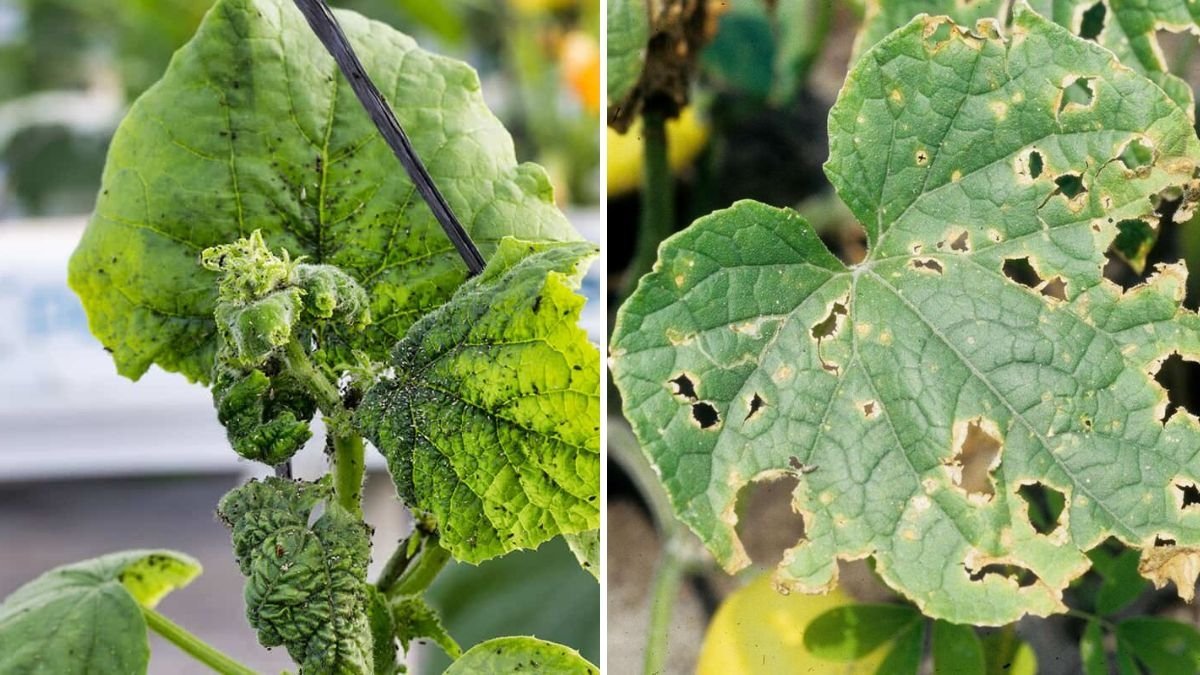
Cucumbers are a favorite in many home gardens, appreciated for their crisp texture, refreshing taste, and versatility in salads, pickles, and snacks. However, cucumber plants are not without their challenges. One of the most common issues gardeners face is pest infestation. Pests can damage leaves, stems, flowers, and fruits, reducing yield and even killing the plant if left unchecked.
The good news is that with early detection, preventive measures, and natural control strategies, you can protect your cucumber plants and enjoy a bountiful harvest. In this guide, we’ll explore the five most common pests that attack cucumbers and explain how to prevent and manage them effectively.
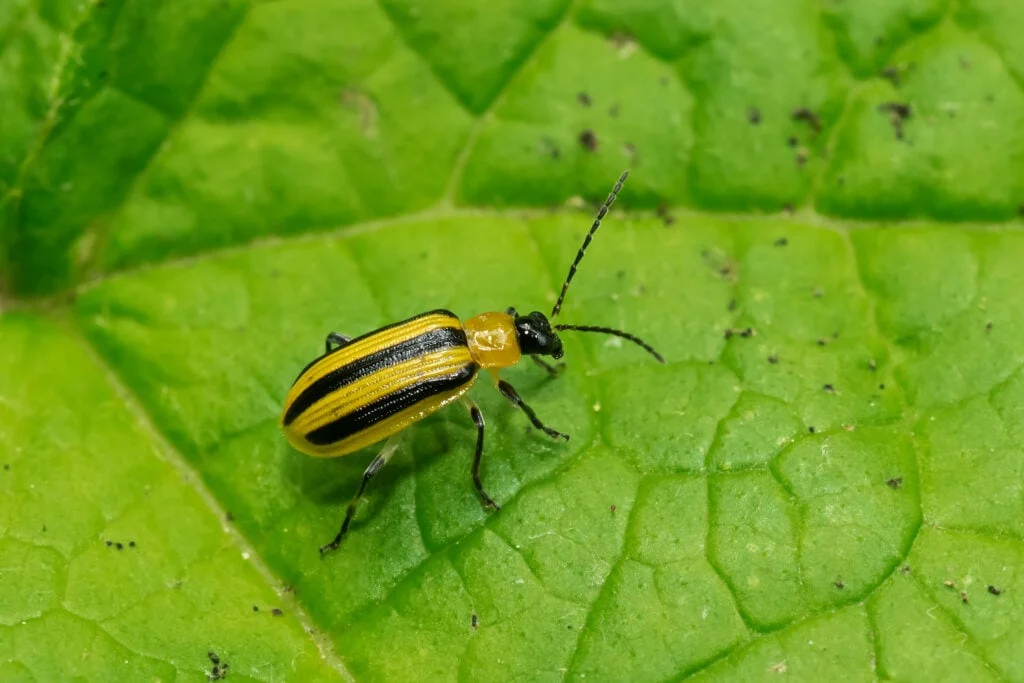
1. Cucumber Beetles
Why They’re a Problem
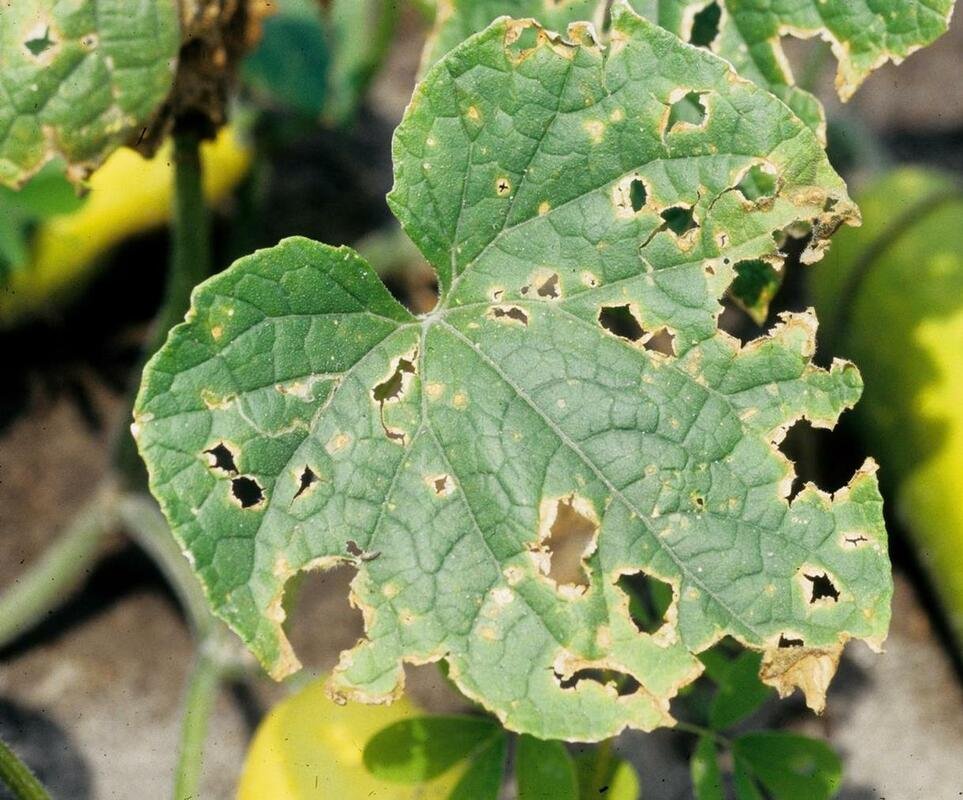
Cucumber beetles are small, striped or spotted insects that feed on leaves, flowers, and fruits. They are especially dangerous because they can transmit bacterial wilt, a serious disease that causes leaves to wilt and plants to die.
Signs of Infestation
- Chewed leaves and flowers
- Yellowing or wilting of leaves
- Presence of small beetles, either yellow-green with black stripes or spotted
Prevention and Control
- Row covers: Protect young plants by covering them with lightweight fabric until they start flowering.
- Handpicking: Remove beetles manually if infestations are small.
- Trap crops: Plant radishes or nasturtiums nearby to attract cucumber beetles away from cucumbers.
- Neem oil spray: Acts as a natural deterrent while minimizing harm to beneficial insects.
2. Aphids
Why They’re a Problem
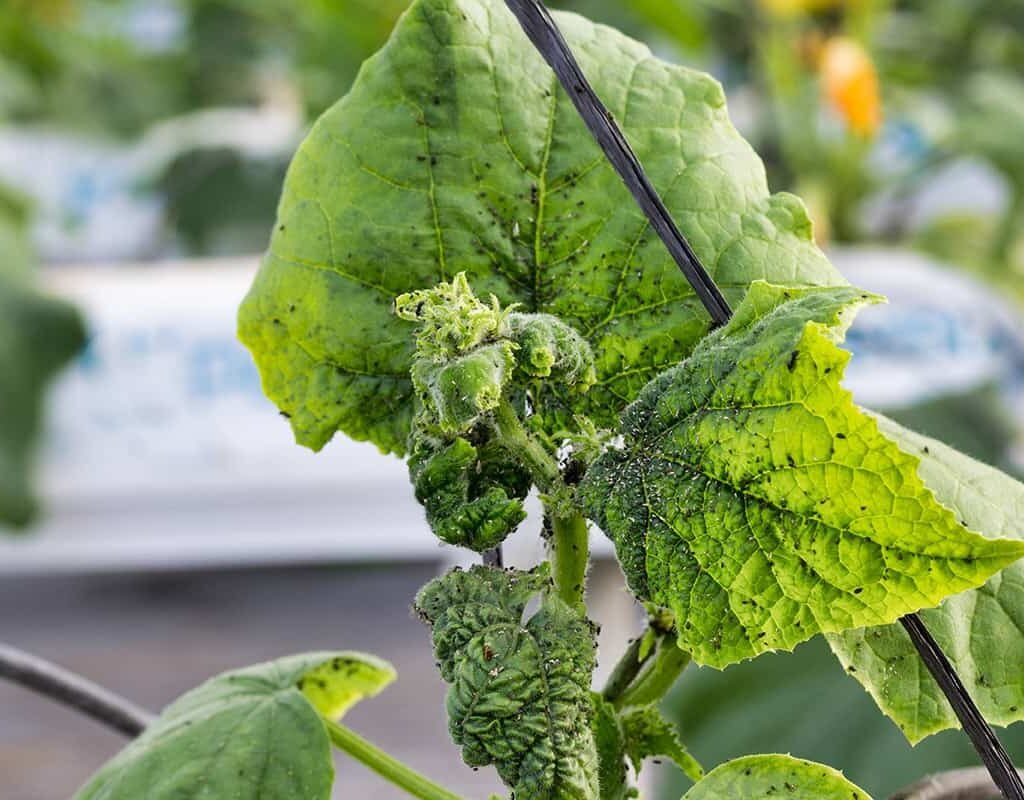
Aphids are tiny, soft-bodied insects that feed on plant sap, weakening cucumber plants and causing distorted leaves and reduced fruit quality. They also secrete sticky honeydew, which can lead to fungal growth.
Signs of Infestation
- Curling, yellowing, or stunted leaves
- Sticky residue on leaves and stems
- Clusters of tiny green, black, or red insects on undersides of leaves
Prevention and Control
- Encourage natural predators: Ladybugs, lacewings, and parasitic wasps feed on aphids.
- Companion planting: Plant garlic, chives, or marigolds nearby to repel aphids.
- Soap spray: Mix mild liquid soap with water and spray affected areas.
- Water spray: A strong jet of water can dislodge aphids from leaves.
3. Spider Mites
Why They’re a Problem
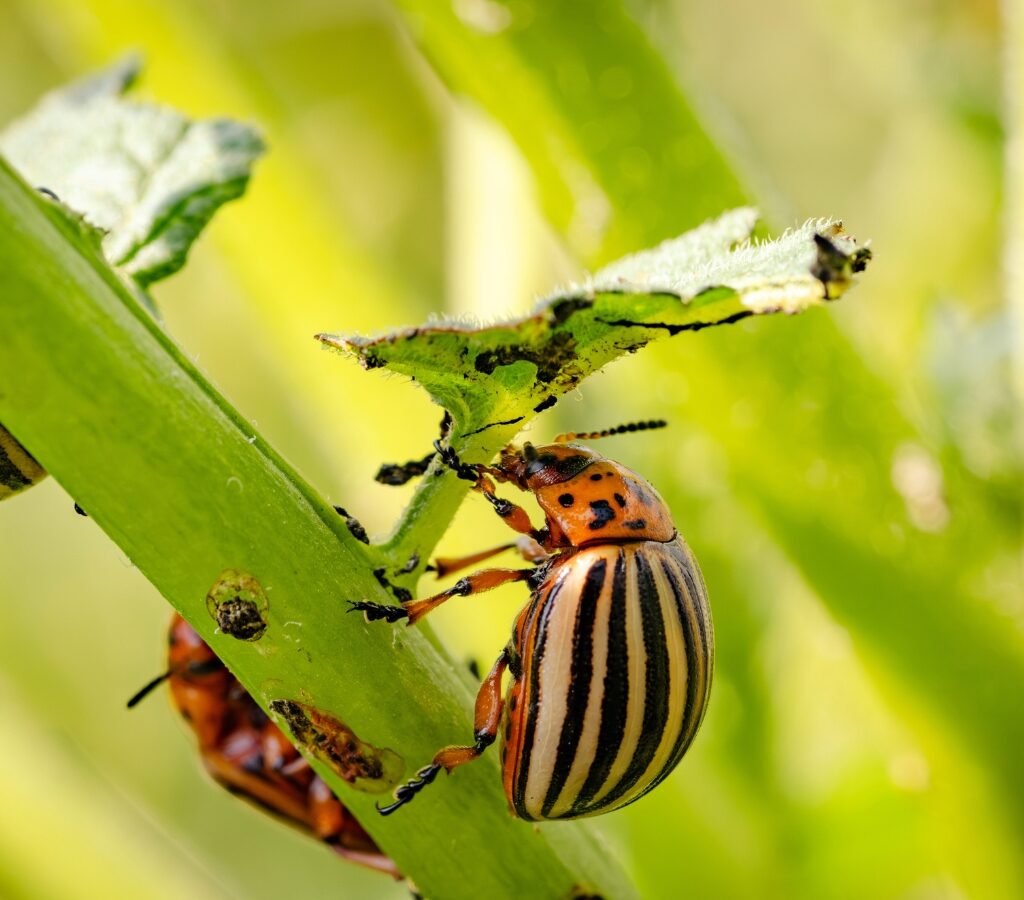
Spider mites are tiny arachnids that feed on the undersides of leaves, causing stippling, yellowing, and webbing. They thrive in hot, dry conditions and can spread rapidly if not controlled.
Signs of Infestation
- Tiny yellow or white spots on leaves
- Fine webbing on leaves and stems
- Leaves turning bronze or falling off
Prevention and Control
- Maintain humidity: Mist plants or use drip irrigation to reduce dry conditions that favor mites.
- Regular inspection: Check the undersides of leaves weekly.
- Insecticidal soap or neem oil: Spray affected areas thoroughly.
- Remove heavily infested leaves: Dispose of them away from the garden.
4. Squash Bugs
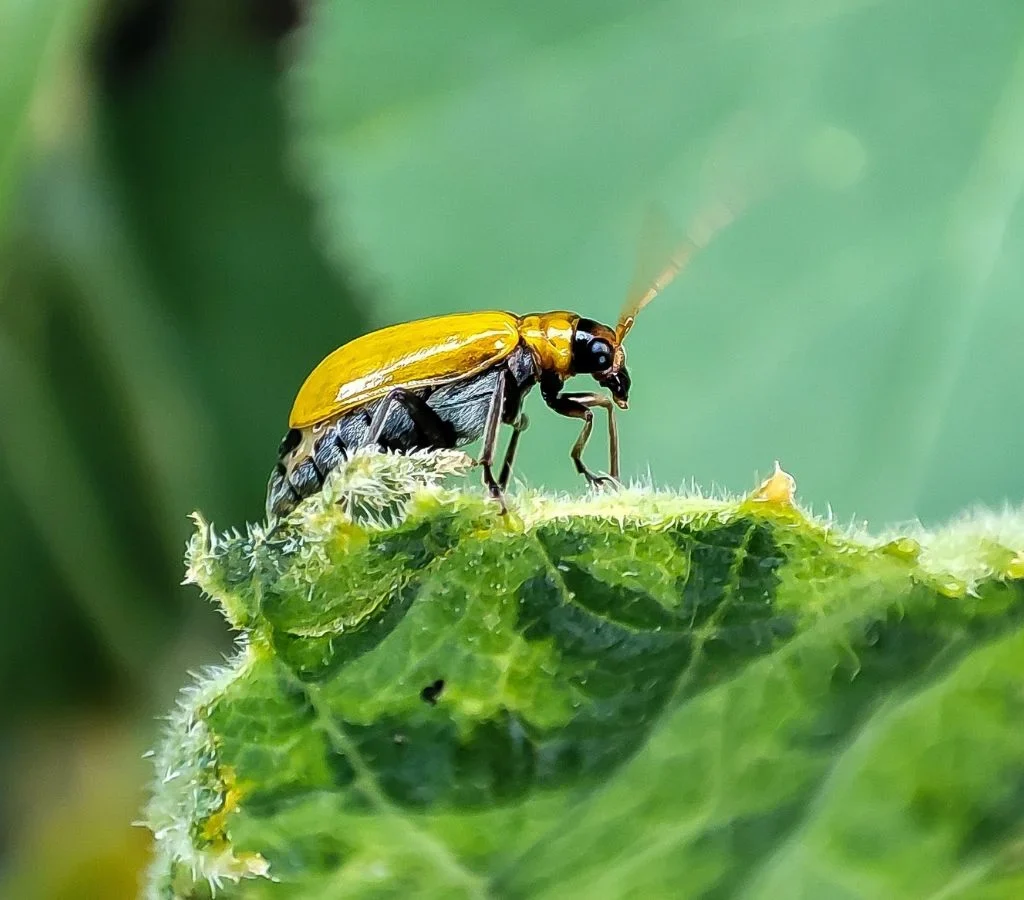
Why They’re a Problem
Squash bugs are large, brownish insects that suck sap from cucumber leaves and stems, causing wilting and yellow spots. They can severely stunt plant growth and reduce yields.
Signs of Infestation
- Yellow spots on leaves that eventually turn brown
- Wilting plants despite adequate water
- Presence of dark, shield-shaped bugs and their clusters of bronze eggs
Prevention and Control
- Handpicking: Remove adults and eggs regularly.
- Row covers: Protect young plants until they start flowering.
- Remove debris: Clear fallen leaves and plant material to reduce hiding spots.
- Neem oil: Works as a deterrent when applied carefully.
5. Whiteflies
Why They’re a Problem
Whiteflies are tiny, white, flying insects that feed on the undersides of cucumber leaves. They weaken plants, cause leaf yellowing, and transmit viral diseases.
Signs of Infestation
- Tiny white insects flying up when leaves are disturbed
- Yellowing or curling leaves
- Sticky honeydew on leaves leading to sooty mold
Prevention and Control
- Sticky traps: Yellow sticky cards attract and trap adult whiteflies.
- Natural predators: Introduce lacewing larvae or ladybugs to feed on whiteflies.
- Neem oil spray: Helps reduce populations and prevent egg-laying.
- Reflective mulches: Silver or reflective plastic can repel adult whiteflies.
General Tips for Preventing Cucumber Pests
- Rotate crops: Avoid planting cucumbers in the same location each year to reduce pest buildup.
- Plant healthy seedlings: Start with disease-free, vigorous plants.
- Proper spacing: Ensure good airflow to reduce humidity and discourage pests.
- Watering practices: Water at the base of plants to keep foliage dry and less inviting to pests.
- Inspect regularly: Early detection allows for quick intervention before infestations spread.
- Companion planting: Herbs like basil and dill, and flowers like marigolds, attract beneficial insects and repel pests.
- Clean garden tools: Prevent the spread of pests and diseases by sterilizing tools and containers.
Conclusion
Cucumber pests can be frustrating, but understanding their habits and vulnerabilities allows gardeners to prevent and control infestations naturally. By implementing strategies such as companion planting, encouraging beneficial insects, maintaining healthy plants, using physical barriers, and applying natural sprays, you can keep cucumbers healthy without relying on harmful chemicals.
Protecting your cucumbers naturally not only promotes a bountiful, healthy harvest but also supports a sustainable, eco-friendly garden ecosystem. With vigilance, consistency, and the right preventive measures, cucumber pests can be managed effectively, ensuring your garden thrives season after season.

Leave A Comment