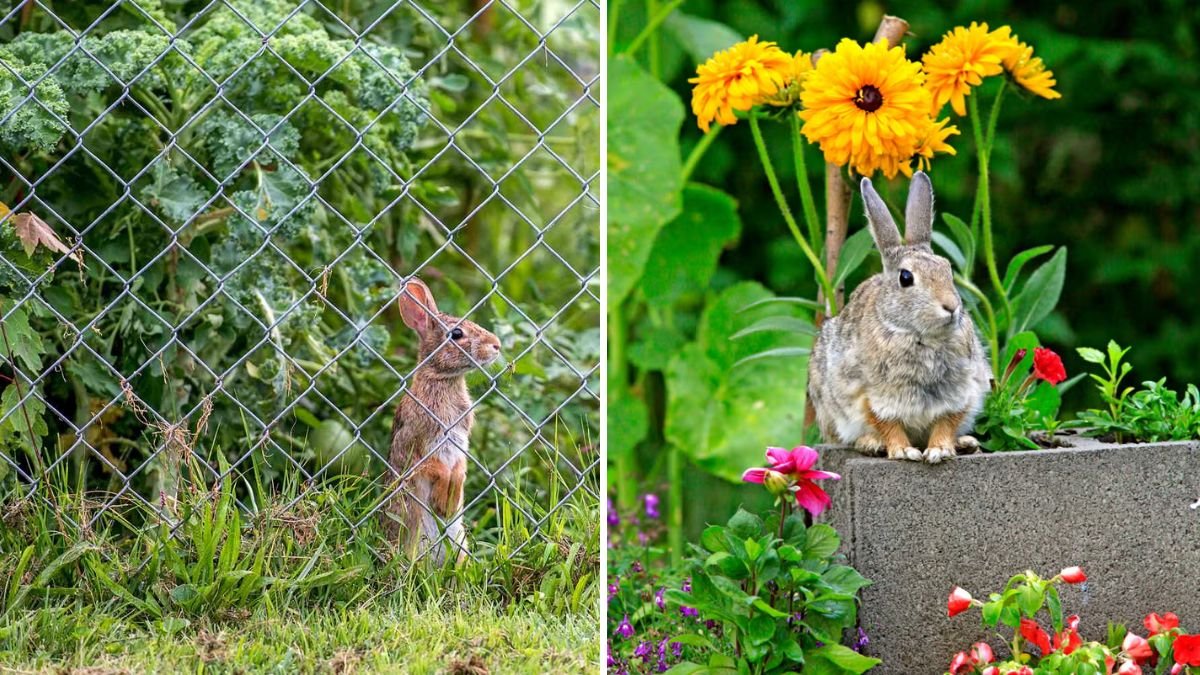
Rabbits are adorable creatures in the wild, but in your garden, they can quickly turn from charming to destructive. These small herbivores love nibbling on tender seedlings, vegetables, and flowers, leaving behind holes, stunted growth, and significant frustration for gardeners. While fencing is the most obvious solution, not every gardener has the space, budget, or aesthetic preference for barriers. Fortunately, there are effective ways to deter rabbits without building a fence.
In this guide, we’ll explore five natural and practical methods to keep rabbits away, ensuring your plants thrive while maintaining a rabbit-friendly ecosystem nearby.
1. Plant Rabbit-Repellent Vegetation
Why It Works
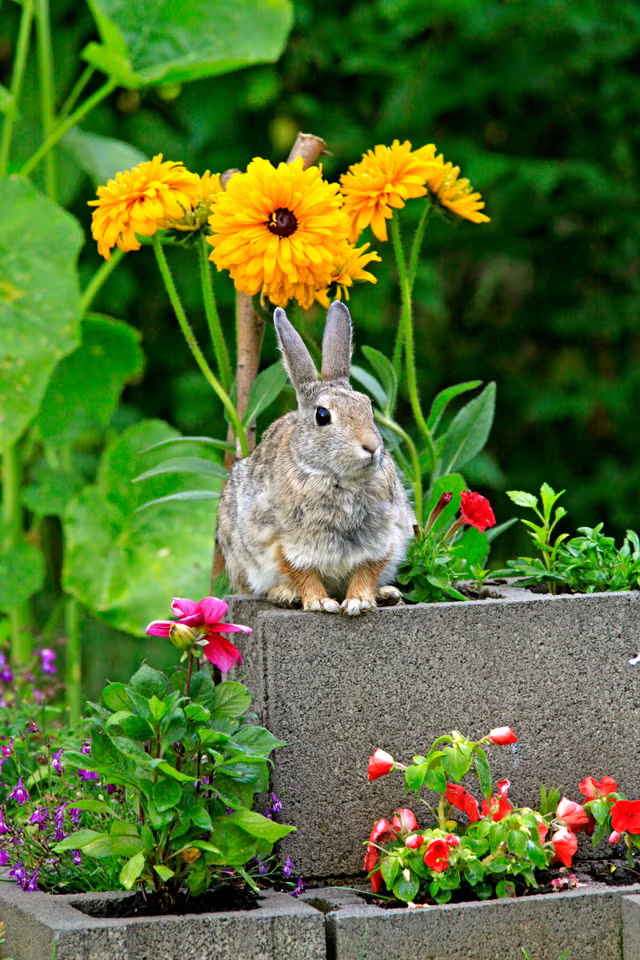
Rabbits avoid certain plants due to strong scents, tough textures, or bitter flavors. By strategically planting these species around your garden, you can create a natural barrier that discourages intrusions.
Recommended Rabbit-Repelling Plants
- Lavender: Strong fragrance deters rabbits while attracting pollinators.
- Marigolds: Their pungent aroma acts as a natural repellent.
- Alliums (garlic, onions, chives): Strong flavors and odors keep rabbits away.
- Daffodils and fritillaries: Toxic and unappealing to rabbits.
- Sage and rosemary: Aromatic herbs that rabbits typically avoid.
How to Implement
- Surround vegetable beds and flower borders with rabbit-repellent plants.
- Mix these plants with vulnerable crops for added protection.
- Use containers with herbs like garlic or chives near seedlings for extra defense.
Tip: Not only do these plants deter rabbits, but many also attract beneficial insects and enhance garden aesthetics.
2. Use Natural Repellents
Why It Works
Rabbits rely heavily on smell and taste to navigate their environment. Spraying plants or garden beds with natural repellents can create an unpleasant sensory experience, discouraging them from feeding.
Effective Natural Repellents
- Garlic or hot pepper spray: Blend garlic cloves or hot peppers with water, strain, and spray on vulnerable plants.
- Blood meal or bone meal: Sprinkle around plants to deter feeding (also acts as fertilizer).
- Commercial organic repellents: Available at garden centers, often made from predator scents or strong-smelling herbs.
- Soap or hair clippings: Hanging bars of soap or scattering hair around plants can confuse and repel rabbits.
How to Apply
- Spray or sprinkle around the perimeter and directly on plants.
- Reapply after rain or watering for continued effectiveness.
- Combine multiple repellents for a layered defense.
Tip: Rotate repellents to prevent rabbits from becoming accustomed to one scent.
3. Encourage Natural Predators
Why It Works
Rabbits are cautious animals that avoid areas where predators are present. Encouraging natural predators can create a safe but intimidating environment, reducing rabbit activity.
Beneficial Predators
- Birds of prey such as hawks and owls
- Domestic cats or well-trained dogs (under supervision)
- Snakes and foxes in rural areas
How to Implement
- Install perches or nesting boxes for hawks and owls.
- Allow a well-behaved dog or cat to patrol the garden occasionally.
- Avoid using poisons or traps, which can harm other wildlife.
Tip: Providing a balanced ecosystem ensures natural rabbit control without harming the environment.
4. Create Physical Deterrents
Why It Works
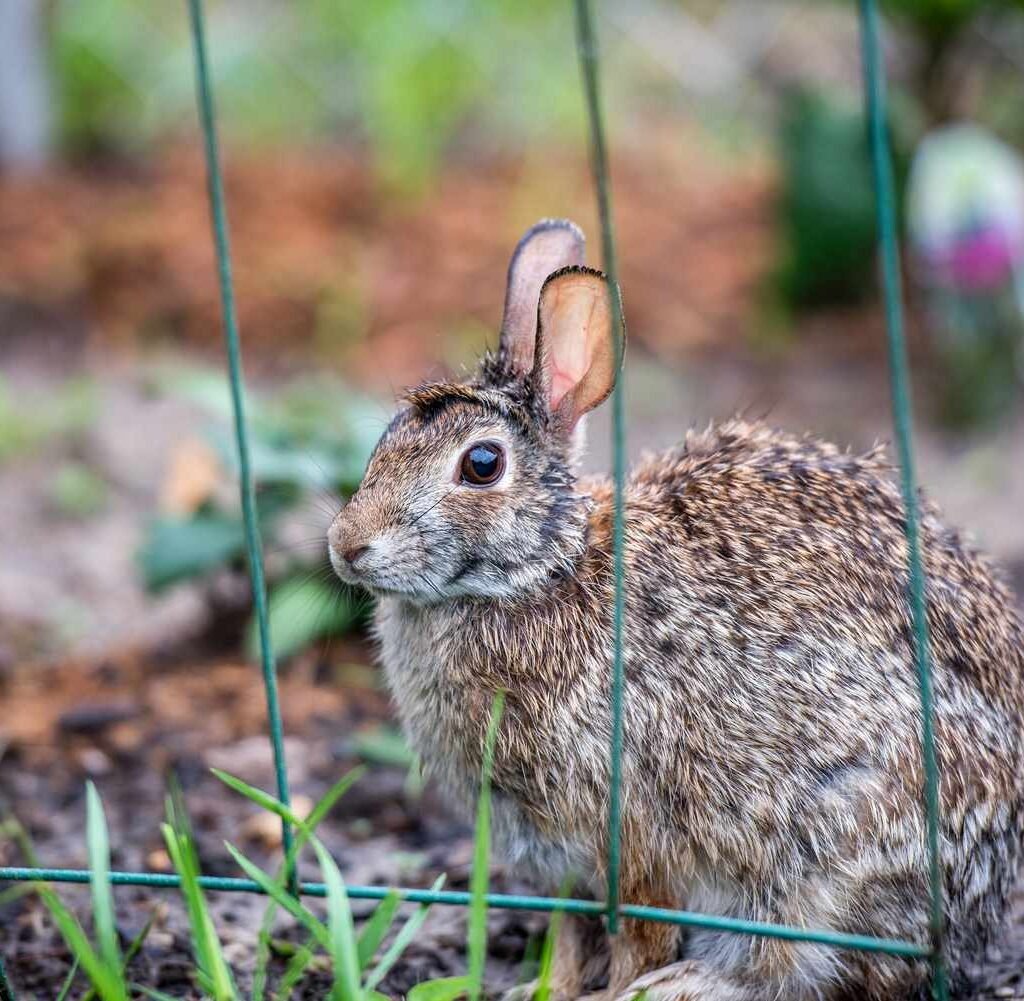
Even without fencing, simple physical barriers can make it difficult for rabbits to access plants, protecting vulnerable seedlings and crops.
Practical Deterrents
- Garden cloches or plant covers: Place over young plants to block access.
- Row covers: Lightweight fabric draped over beds can prevent rabbits from reaching plants while allowing sunlight and water.
- Mulches with rough textures: Pinecones, crushed stone, or coarse bark can make areas uncomfortable for rabbits to traverse.
- Motion-activated devices: Sprinklers or lights can startle rabbits and discourage them from entering your garden.
How to Implement
- Use covers during early seedling stages when plants are most vulnerable.
- Combine deterrents with repellents for maximum protection.
- Check covers regularly to ensure plants continue receiving sufficient light and water.
Tip: Rotate deterrents and occasionally change their placement to keep rabbits guessing.
5. Maintain a Rabbit-Unfriendly Garden Environment
Why It Works
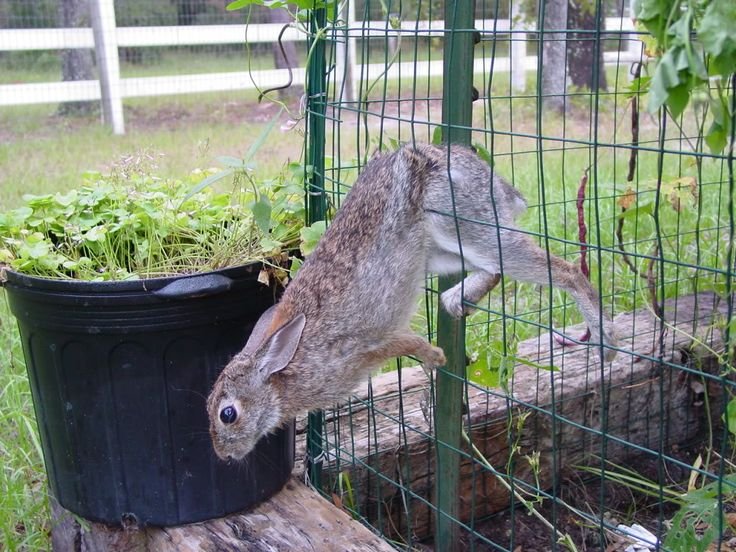
Rabbits thrive in gardens with dense cover and easy food access. By making your garden less hospitable, you can discourage them from settling nearby.
Practical Tips
- Trim shrubs and groundcover: Remove dense vegetation where rabbits hide.
- Keep grass short: Rabbits prefer tall grass for cover and safety.
- Clean up fallen fruit and vegetables: Rotting produce attracts rabbits and other pests.
- Use raised beds: Elevating plants makes it harder for rabbits to reach seedlings.
How to Implement
- Inspect your garden regularly for new hiding spots or debris.
- Combine habitat management with companion planting and natural repellents.
- Rotate crops and bed placement to reduce predictability for pests.
Tip: A tidy, well-maintained garden is less inviting to rabbits and easier to manage overall.
Additional Tips for Sustainable Rabbit Control
- Combine methods: Using repellents, companion plants, and deterrents together is more effective than relying on a single method.
- Monitor activity: Check your garden frequently for signs of rabbit presence, such as droppings or nibble marks.
- Plant sacrificial crops: Place a few plants like lettuce or clover away from the main garden to distract rabbits.
- Avoid feeding wildlife near the garden: Feeding attracts rabbits and other pests.
- Stay consistent: Regular maintenance and reapplication of deterrents ensure long-term protection.
Conclusion
Rabbits may be cute, but they can wreak havoc on gardens if left unchecked. While fencing is the traditional solution, there are numerous effective ways to deter rabbits naturally.
The five most reliable strategies include:
- Planting rabbit-repellent vegetation like garlic, marigolds, and lavender.
- Using natural repellents such as garlic spray or blood meal.
- Encouraging natural predators to create a cautious environment.
- Implementing physical deterrents like row covers, cloches, or rough mulch.
- Maintaining a rabbit-unfriendly garden by reducing hiding spots and managing vegetation.
By combining these strategies, gardeners can protect their vegetables, flowers, and shrubs without resorting to harmful chemicals or unsightly fences. A well-planned, rabbit-resistant garden ensures healthy plants, thriving harvests, and a sustainable ecosystem—all while keeping these charming critters safely at a distance.