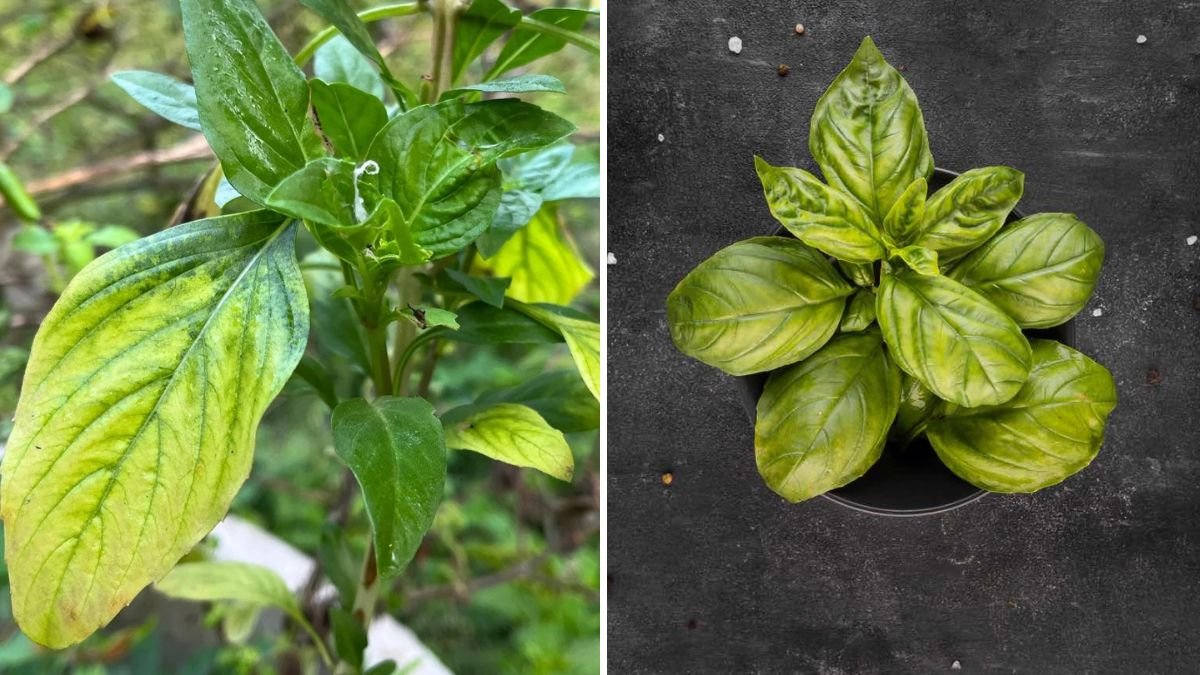
Basil is one of the most beloved herbs in gardens and kitchens around the world. Its vibrant green leaves, aromatic scent, and fresh flavor make it a staple for countless dishes. Yet, many gardeners face a common frustration: yellowing basil leaves. Seeing your once-lush plant develop yellow spots or wilted foliage can be alarming, but the good news is that yellowing is often a sign that something in its environment can be adjusted.
In this guide, we’ll explore five common reasons basil leaves turn yellow and provide actionable solutions to restore your plant’s health.
1. Overwatering: The Most Common Culprit
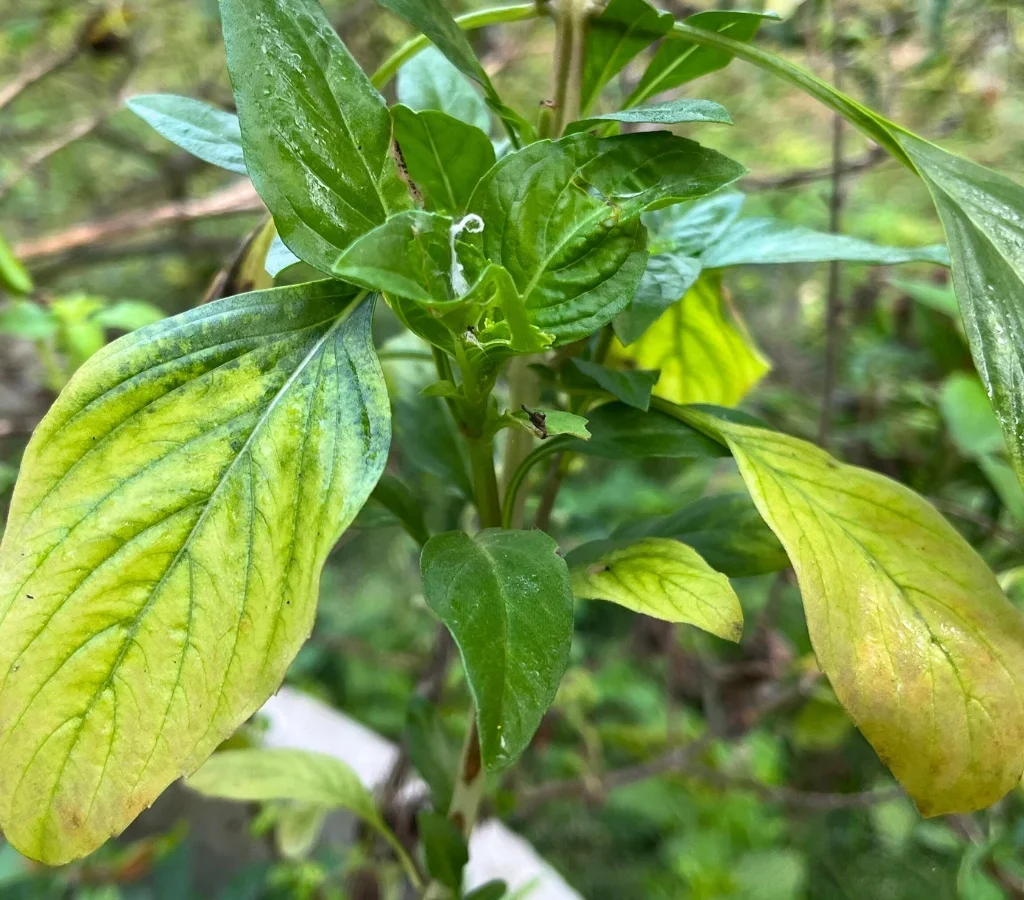
Why It Happens
Basil is sensitive to excessive moisture. When soil remains soggy, roots can’t get the oxygen they need, leading to root rot. The first visible symptom is yellowing leaves, often starting at the bottom of the plant.
How to Fix It
- Check the soil: Stick your finger 1–2 inches into the soil. If it feels wet, hold off on watering.
- Improve drainage: Use pots with holes and a well-draining soil mix (peat or coco coir combined with perlite works well).
- Water wisely: Water only when the top inch of soil is dry, and water at the base of the plant rather than over the leaves.
- Remove damaged leaves: Yellow or wilted leaves should be pruned to redirect energy to healthy growth.
Tip: If root rot is severe, gently remove the plant, trim affected roots, and repot in fresh, dry soil.
2. Underwatering: When Thirst Takes a Toll
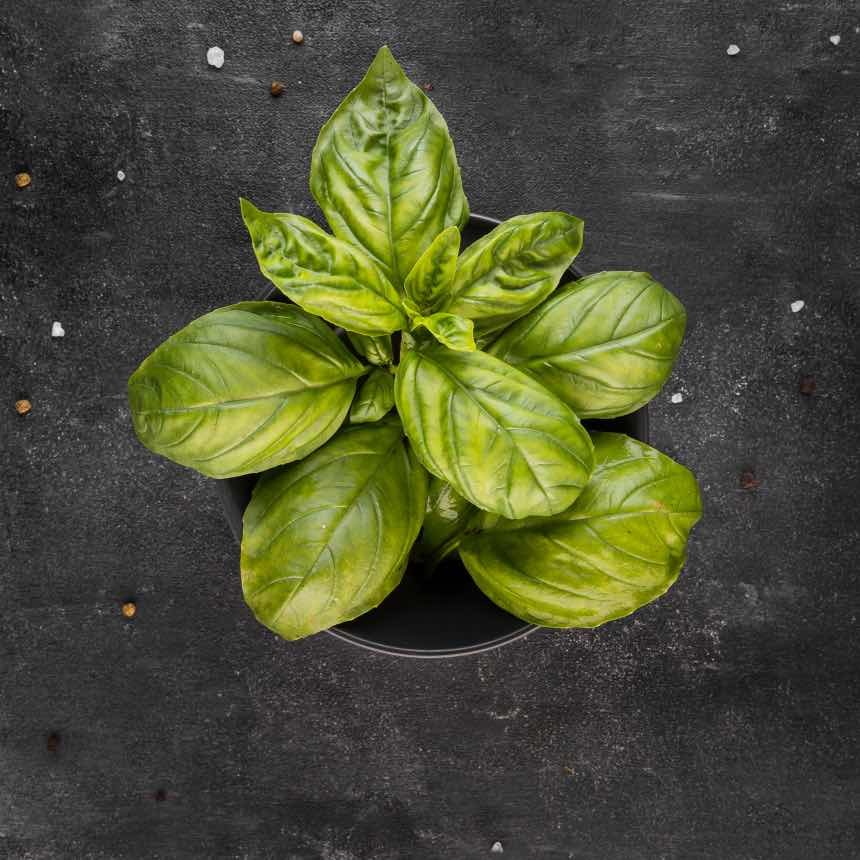
Why It Happens
While overwatering is common, underwatering can also cause yellow leaves. Without enough water, basil becomes stressed, leaves lose turgor (firmness), and lower leaves often yellow first.
How to Fix It
- Water consistently: Basil prefers slightly moist soil. Aim for a regular watering schedule, especially in hot weather or indoor conditions.
- Check humidity: If indoors, dry air can exacerbate dehydration. Mist leaves occasionally or place a humidity tray nearby.
- Mulch outdoors: A thin layer of organic mulch helps retain soil moisture during hot days.
Tip: Avoid letting the soil dry completely between waterings, but also ensure it’s not soggy. Balance is key.
3. Nutrient Deficiency: Lack of Essential Elements
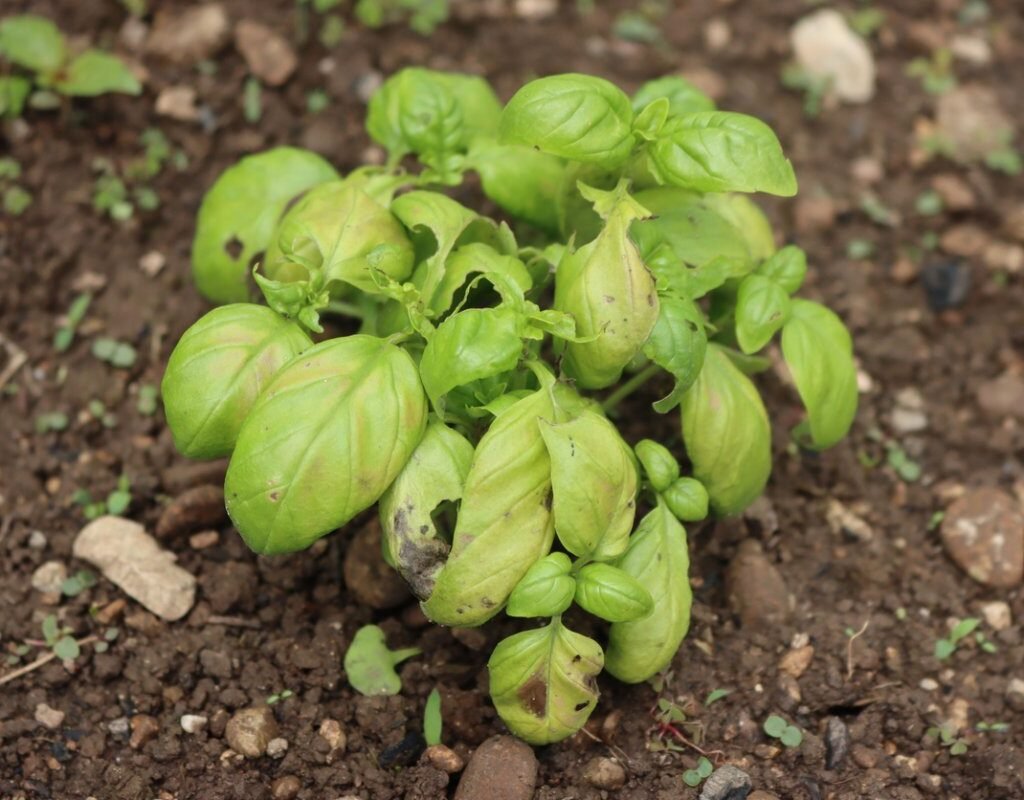
Why It Happens
Basil requires a steady supply of nutrients, particularly nitrogen, for vibrant green leaves. Yellowing often indicates a nutrient imbalance. Nitrogen deficiency typically causes older leaves to yellow first, while younger leaves remain green.
How to Fix It
- Fertilize appropriately: Use a balanced, water-soluble fertilizer or compost. For nitrogen boosts, choose a fertilizer with higher nitrogen content (the first number in the N-P-K ratio).
- Avoid overfertilizing: Excess fertilizer can burn roots and worsen yellowing. Follow package directions carefully.
- Use organic amendments: Compost, worm castings, or diluted fish emulsion provide gentle, natural nutrition.
Tip: Observe your plant after fertilizing—new growth should appear lush and green within a few weeks.
4. Environmental Stress: Temperature, Light, and Drafts
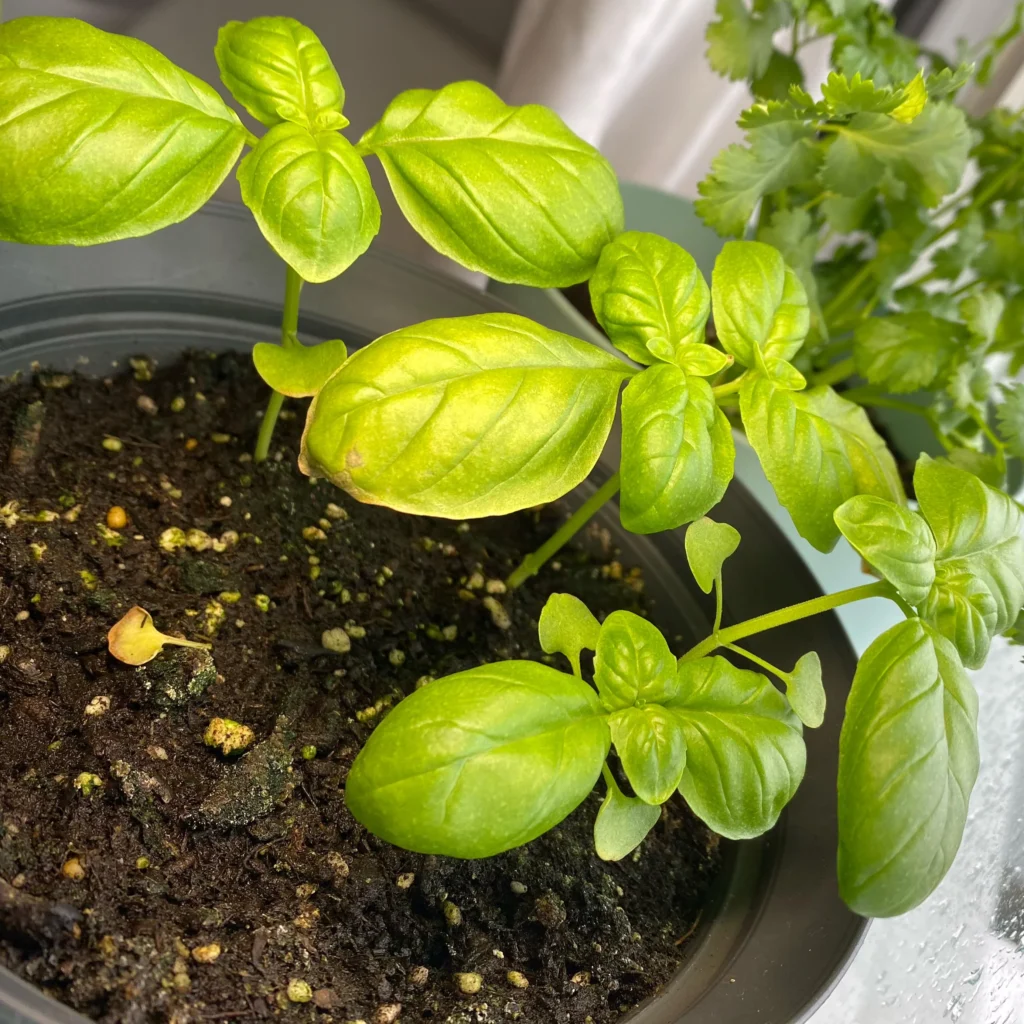
Why It Happens
Basil is a warm-weather herb. Sudden changes in temperature, cold drafts, or insufficient light can cause yellowing leaves.
- Cold stress: Temperatures below 50°F (10°C) slow growth and trigger yellowing.
- Too much sun: Intense, direct sunlight can scorch leaves, causing yellow or brown patches.
- Too little light: Insufficient light weakens the plant, causing pale or yellow leaves.
How to Fix It
- Maintain ideal temperature: Keep basil between 65–85°F (18–29°C).
- Adjust light exposure: Provide 6–8 hours of bright, indirect light daily. For indoor basil, a sunny windowsill or grow light works best.
- Protect from drafts: Avoid placing pots near air conditioners, heaters, or drafty windows.
Tip: Gradually acclimate outdoor basil to direct sunlight to prevent sunburn.
5. Pests and Diseases: Hidden Threats
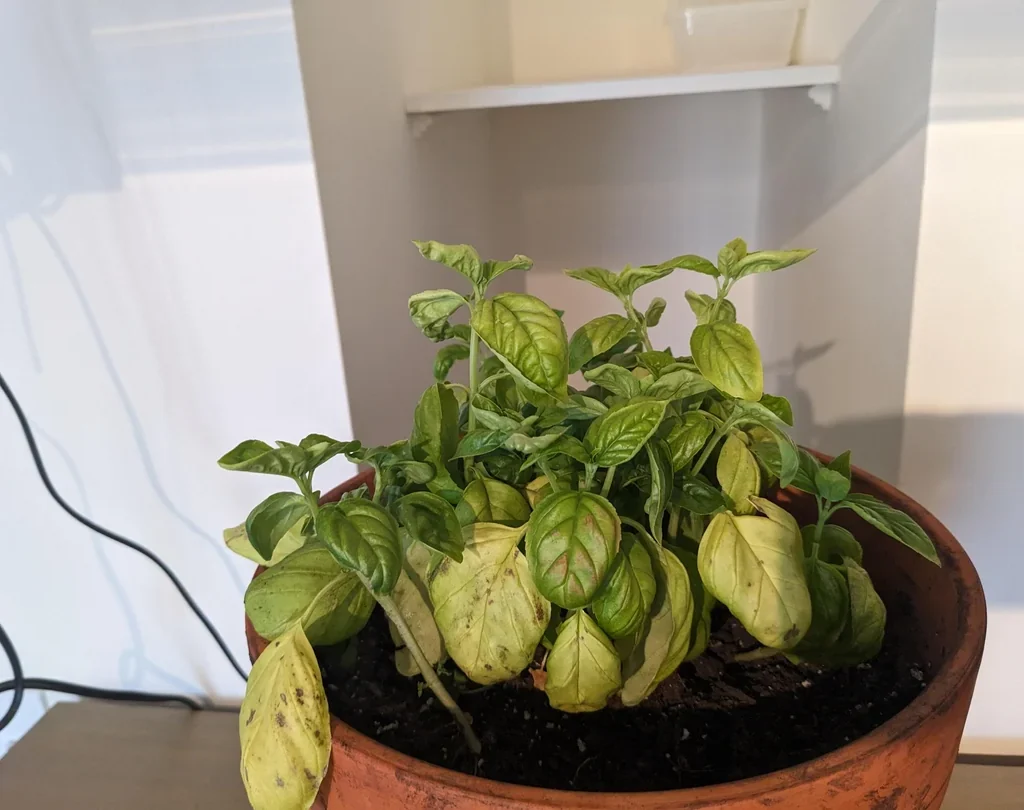
Why It Happens
Basil is prone to pests and fungal diseases, which can stress the plant and cause yellowing. Common issues include:
- Aphids: Tiny insects that suck sap from leaves. Leaves may yellow and curl.
- Spider mites: Cause stippled yellow spots and fine webbing.
- Fungal infections: Downy mildew or root rot from overwatering.
How to Fix It
- Inspect regularly: Check leaves (especially undersides) for pests or signs of disease.
- Natural pest control: Spray with insecticidal soap or neem oil. Ladybugs also help control aphids.
- Fungal prevention: Avoid overhead watering and ensure good air circulation. Remove affected leaves promptly.
- Clean tools and pots: Prevent spreading disease by sterilizing scissors and containers.
Tip: Isolate affected plants until the issue is resolved to protect healthy plants nearby.
Additional Tips for Healthy, Green Basil
- Prune regularly: Removing older or yellowing leaves encourages new growth.
- Pinch growing tips: This promotes bushier plants rather than tall, leggy growth.
- Rotate plants: Ensure even light exposure on all sides.
- Repot when necessary: Crowded roots may limit nutrient uptake, causing yellow leaves.
- Harvest wisely: Don’t remove more than one-third of the plant at a time to avoid stress.
Conclusion
Yellow leaves on basil are a signal—not a death sentence. By understanding the common causes—overwatering, underwatering, nutrient deficiency, environmental stress, and pests—you can diagnose the problem and take steps to restore your plant’s health.
Healthy basil leaves are lush, green, and aromatic, and with consistent care, you can enjoy a thriving herb garden year-round. Remember, attentive watering, proper nutrients, suitable light, and vigilant pest control are the pillars of strong, vibrant basil plants.
By addressing these five issues promptly, you’ll not only prevent yellow leaves but also maximize flavor, growth, and longevity of your basil—turning your garden or kitchen into a flourishing green sanctuary.